
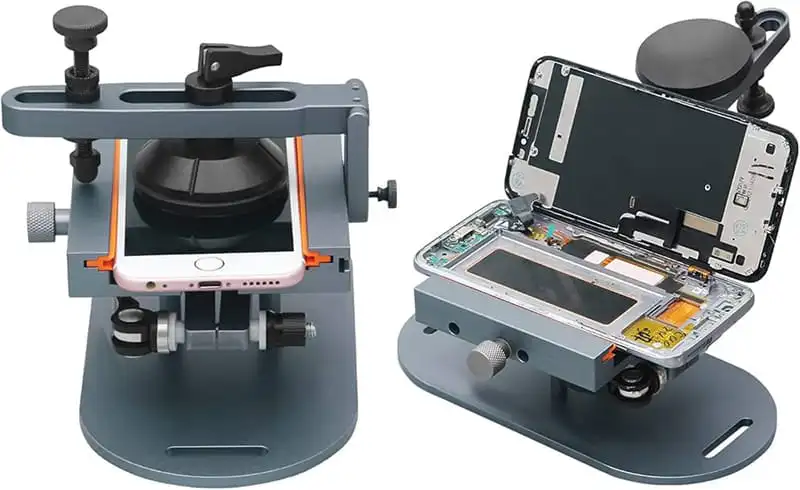
✓ The good news: the process has been greatly simplified
We use the same tools and procedures as the official Apple service. On recent models, we don't even need to remove the display to change the battery.
- → No display removal — reduced risk of screen damage
- → Electrically-released adhesive — battery detaches easily, no force
- → Software calibration — the new battery is correctly recognised by the system
- → Reduced duration — 15-30 minutes instead of 1 hour
Standard battery replacement process
Initial diagnostic
5 minWe check phone condition, Battery Health, and identify any existing issues before intervention.
Opening the phone
3-5 minWe use professional tools to safely open the device without damaging internal components.
Battery replacement
5-10 minRemove the old battery and install the new one. On recent models, the adhesive releases electrically — no risk of board bending.
Reassembly and testing
5-10 minClose the phone, verify all functions (screen, buttons, cameras, sensors) and confirm everything works correctly.
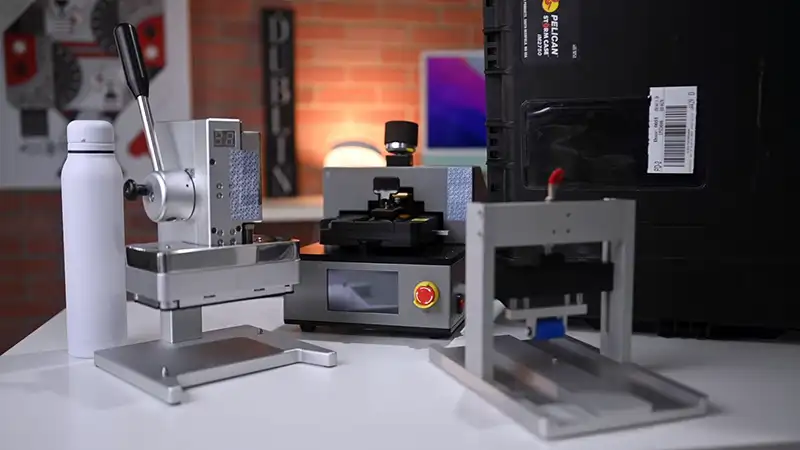
But... there are risks you need to know about
Here's the part other shops don't tell you. The risks don't come from us — the battery replacement process is simple and standardised. The risks come from your phone's history.
Accumulated mechanical stress
Your phone has been in your pocket thousands of times. It twisted slightly when you sat down. It fell a few times — maybe you don't even remember. It was hit by keys, pressed in a bag. All these micro-events haven't affected operation because components were "held in place" by the closed assembly pressure.
What happens: The moment we open the phone, this pressure disappears. Components with weakened solder or micro-fractures can "give way" exactly at that moment.
Micro-weakened solder joints
The iPhone's logic board contains hundreds of tiny components, soldered at microscopic level. Falls, twisting, and thermal shocks (phone in sun, then in AC) can weaken these solder joints over time. The phone works normally because components are still in contact — but at the limit.
What happens: Minimal vibrations from opening or simple handling can "break" contact on a component already weakened. The problem appears, but not because of the intervention — because of the phone's history.
Temperature sensors — most frequently affected
From our experience, the most frequently failing components are the temperature sensors on the logic board (technically called "NTC thermistors"). The iPhone has multiple such sensors that constantly monitor component temperature to prevent overheating.
What happens: If a sensor fails, the phone "believes" it's overheating and shuts down to protect components — even though the actual temperature is normal.
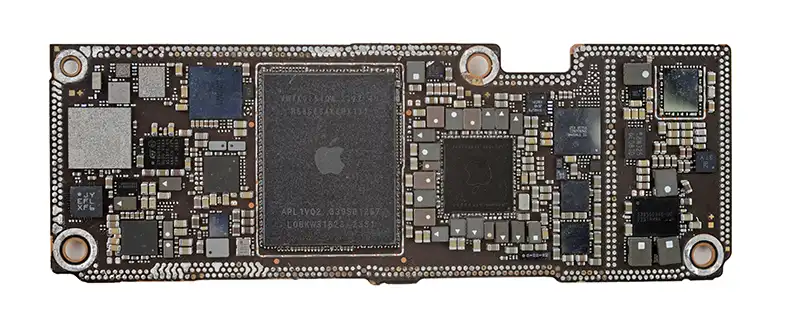
Why do temperature sensors fail?
To understand better, you should know that your iPhone has a complex thermal monitoring system. The processor constantly requests data from sensors, essentially asking: "Are we about to catch fire?" If it doesn't get an answer for 3 minutes, the phone panics and restarts for safety.
📍 Where temperature sensors are located in the iPhone
Battery sensor
Integrated in battery / on battery connector
Charging port sensor
On Lightning/USB-C port flex
Board NTC sensors
Multiple thermistors on the logic board
🚨 Symptoms when a temperature sensor fails
- ⚠️Phone shuts down by itself after 2-3 minutes of operation, even if it isn't hot
- ⚠️Message "iPhone needs to cool down" appears even though the phone is cold to the touch
- ⚠️Phone enters a continuous reboot cycle (boot loop)
- ⚠️In rare cases: phone no longer powers on at all
How we solve these problems
The good news is these problems are repairable. The less-good news is they require specialised equipment and expertise in micro-soldering. A 15-minute operation can become a multi-hour one.
Advanced diagnostic
We read system error logs to identify exactly which sensor failed. Each iPhone generates "panic logs" that tell us precisely where the issue is.
⏱ 30-60 minMicro-soldering
We use a microscope and hot-air soldering station to repair or replace the affected component — often smaller than a grain of rice.
⏱ 1-3 hoursFull testing
After repair, the phone is extensively tested to ensure all functions operate correctly and no more temperature errors appear.
⏱ 30 minRepair warranty
We offer warranty on the performed repair. If the issue returns within the warranty period, we solve it at no additional cost.
⏱ 3 month warrantyOur transparency commitment
Information before intervention
We explain possible risks BEFORE opening the phone. If we notice signs of damage, we warn that complication odds increase.
Immediate notification if a problem arises
If a problem appears during or after the battery change, we call you immediately. We hide nothing.
Clear pricing for every scenario
Battery replacement has a price. Additional repair has a different price. You know exactly what you're paying and for what — no surprises.
Option to decline extended repair
If a problem arises and the cost exceeds what you're willing to pay, you can choose not to continue. You only pay for the diagnostic.
Costs: standard vs complicated scenario
97% of cases
Standard battery replacement
300-800 RON
15-30 minutes
- ✓ New premium-quality battery
- ✓ Professional installation
- ✓ Full testing
- ✓ 3-month warranty
2-3% of cases
+ Temperature sensor repair
+200-400 RON
+2-4 hours additional
- ✓ Everything in the standard package
- ✓ Advanced diagnostic
- ✓ Micro-soldering repair
- ✓ Extended testing + 3 month warranty
* Prices vary by model. Contact us for an exact quote.